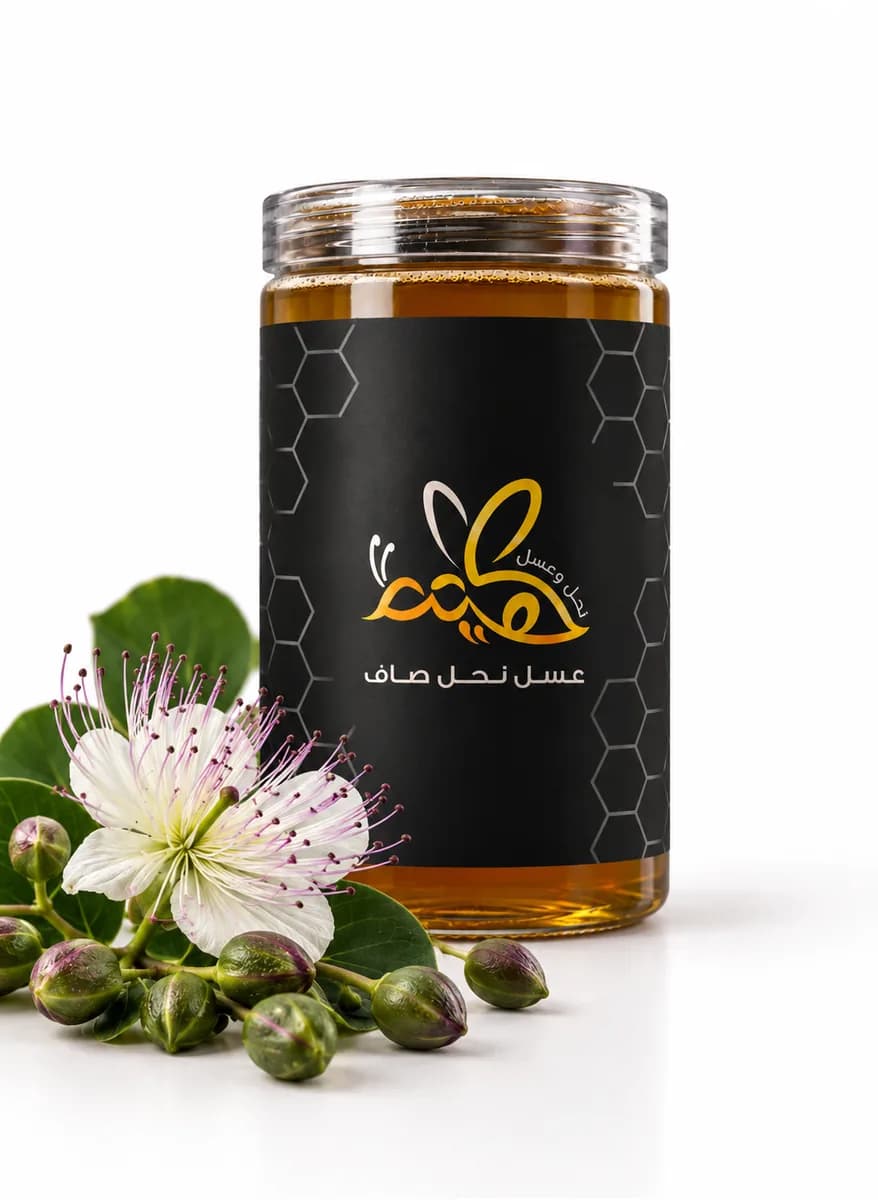
Syrian Caper Honey
عسل القبار
1,000 SYP · 500 g
Caper honey is one of the rarest Syrian honeys. Most people who ask about it have heard of it but never tasted it, and that alone says something about how little of it exists.
- Plant
- Wild caper (Capparis spinosa), known locally as qabbar or shafallah
- Season
- Late May to August, peaking in June and July
- Colour
- Dark amber, darker than mountain honey, lighter than black seed
- Taste
- Sharp and distinctive, with a light bite at the finish
- Crystallisation
- Slow to medium
Delivered across Syria, cash on delivery. We do not ship outside Syria yet.
Why caper honey is genuinely rare
Nobody farms caper. The bush grows on its own between rocks, on the edges of the steppe and on abandoned land, so bees never find it in dense fields the way they find black seed or sunflower.
Its large white flower with long purple stamens opens at sunset and wilts in the heat of the next day. Bees work it at dawn, so the nectar window is a few hours, not a whole day.
If someone offers you large quantities of caper honey at an ordinary price, ask where it comes from. The real harvest is limited by the plant itself, not by the beekeeper.
How to enjoy it
Its strong taste is best on its own from a spoon, or with white cheese and nuts. Hot tea and other sugars hide what makes it special.
An honest word on health claims
Caper is part of traditional folk medicine in the Levant, and its honey carries that reputation. But what is said about the plant’s leaves, buds and roots is not necessarily present in the honey made from its nectar. Caper honey is an excellent natural food, not a medicine.