
Our story
Family beekeepers in the countryside of Hama
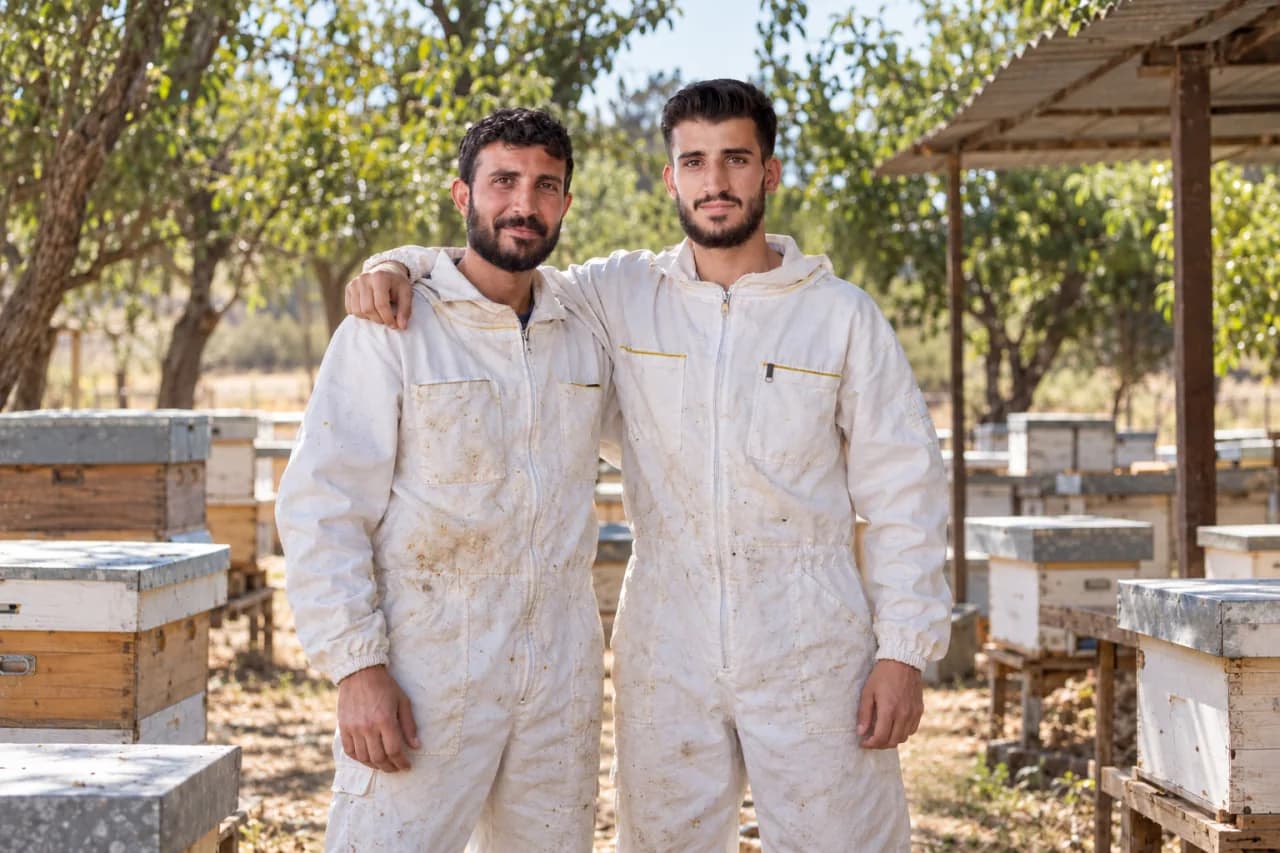
Our journey began in 1997 with our father's passion for bees and a deep respect for the life of the hive. That was 29 years ago. Today the apiary is run by his sons, with around 400 hives, in Qamhana in the Hama countryside.
For us honey is a responsibility before it is a trade. Our family name is on every jar, so we describe every honey as it is: where it comes from, when it is harvested, and what it is not.
Following the seasons
- May–June · Black seed. Farmers sow it for its seeds; we move our hives to the edges of the fields while it flowers.
- June–July · Thistles. When the plains dry out, thistles keep producing nectar in the heat.
- Summer · Caper. A wild bush whose flower opens at sunset and wilts the next day.
- Autumn and winter. No harvest. We leave the bees enough honey to get through the winter.
Independent lab analysis
University of Homs — Faculty of Chemical and Petroleum Engineering · 29 October 2026
| Parameter | Result | Syrian standard |
|---|---|---|
| Moisture | 15.24 % | max 21 % |
| Reducing sugars | 68.22 % | min 60 % |
| Sucrose | 2.03 % | max 5 % |
| Total acidity | 26 meq/kg | max 40 |
The sample conforms to the Syrian standard for the parameters analysed. As the report states, the result applies to the sample we submitted.
See the original report (Arabic)